niedziela, 21 czerwca 2020

He111 - Luftwaffe work horse


Active since the very beginning of the Second World War (or even earlier)  until the last hour of the Third Reich, wrecker of the European cities, air supporter during Blitzkrieg period, destroyer of the enemy navy ... He 111 German medium bomber.

For me it was a "must have" element of early war Luftwaffe collection. The only model of this plane available on the market is - as far as I know - an Armament in Miniature one. Rather average quiality without many details. I belive it comes from the earlier series of this producer. Due to the presence of unter hull gondola the mount is shifted back what affect stability of the model.

Three bombers were painted with Hataka range paints (RLM70/71/65) using airbrush. I'm going to use them as a part of BoB scenarios or even in the role of torpedo bomber hunting down Allied convoys to Soviet Union.


środa, 17 czerwca 2020

Naval mission objectives for Blood Red Skies


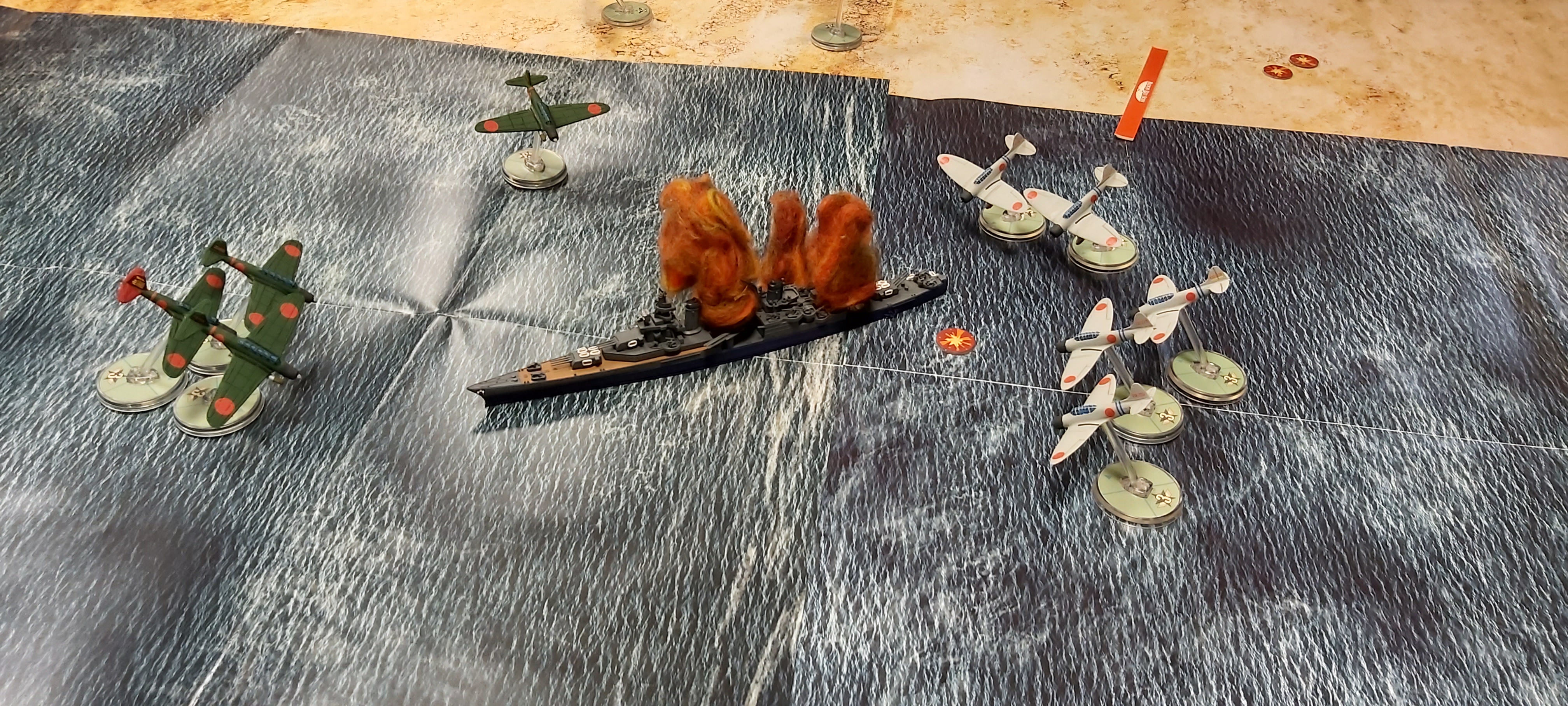
If I have to destroy something I'd like to attack something real like. That's why I decided to make an Airstrike naval objectives as a set of particular models of ships starting with small boats through mighty battleships ending with carriers full of an enemy airpower allowing to turn defeat to victory. I decided to use 1/700 scale waterline models. After few months of work I finally complete a set of  "naval objectives" for both great Far East powers: Imprerial Japan and USA.


Let me introduce each ship class with some hints for the attacker.

Freighters:


Small Japaneese landing transport

Small freighters are poorly armed with anti aircraft guns, vulnerable to straffing attacks. At least two bomb hits or one torpedo hit is necessary to sink her.

Liberty class US large freighter

Large freighters are better armed with anti aircraft guns, vulnerable for straffing attacks. At least three bomb hits or one critical torpedo hit necessary to sink her.

Destroyers


HMAS Vampire, IJN Hatsuzuki, IJN Hatsushimo

Fast moving ships to protect main force from submarine attacks. Armed with some 4-5" guns that give a chance for a Flak Barrage.  Hardened costruction gives them a special protection against level bombers. At least two bomb hits or one torpedo hit necessary to sink her.

Cruisers


USS Indianapolis, IJN Chikuma

The eyes of main naval force due to the presence of recce aircrafts on the board; hardened construction give advantage to bombing runs when armored boards protect against straffing attacks. Due to the presence of medium caliber guns (4-5") the flak barrage effect is available. At least three bomb hits or one critical torpedo hit necessary to sink her.


Battleship


USS Arizona, IJN Hiei

The core of main naval force; hardened construction gives advantage to bombing runs when well armored board protects against any straffing attack. Due to the presence of many medium caliber guns (4-5") the deadly flak barrage effect is available. At least four bomb hits or two torpedo hits necessary to sink her.

Aircraft carrier


USS Enterprise, IJN Zuikaku


The floating airfields absolutely vital to conduct air operations over wide ocean. Extremely well armed with anti aircraft guns but vulnerable to any attacks due to the presence of inflamable substances (as aircraft fuel). At least four bomb hits or two torpedo hits necessary to sink her. 


piątek, 12 czerwca 2020

Let's sink something - BRS air to sea attacks.


Fighers can win none battle; they can only defent offensive component from enemy attack. The bombers are those which determine result of battle. Fortunately Warlord Games launched a supplement to Blood Red Skies game called Airstrike, where all rules concerning attacks on land or sea targets are included.

Bitew nie wygrywają myśliwce; te co najwyżej mogą przeszkodzić przeciwnikowi wygrać. To bombowce rozstrzygają o losach walk na ziemi czy na wodzie. Zapewne dlatego Warlord Games stworzył zasady dodatkowe do gry Blood Red Skies dotyczące niszczenia celów przez lotnictwo ofensywne (czyli bombowe). Mówimy o dodatku Airstrike.


This time I would like to focus on naval targets, due to the fact that warships looks really cool as a markers for the wargame.

Obiekty ataku mogą być różne. W tym wpisie skupię się na atakach na cele morskie, jako że okręty najwdzięczniej prezentują się jako markery na stole.

For the purposes of BRS I'm using 1/700 waterline models of ships. Presented on the sea gamemat look really atractive. Otherwise I like sea battles as a topic of scenarios, Midway battle we have played a year ago is a good example .

Na potrzeby gry osobiście używam modeli w skali 1/700 w wariacie do linii wodnej. Ustawione na macie morskiej wyglądają atrakcyjnie jako cele. Poza tym bitwy "nad morzem" to bardzo wdzięczny temat do scenariuszy, jak np bitwa o Midway.


Before the launch of the full scale battle over sea there is a good time to master the rules of bombardment with different types of aircrafts. There are four kinds of Air-sea attacks in the Airstrike supplement: level bombardment, dive bombardment, torpedo run and straffing attack.

Zanim jednak przejdziemy do pełnowymiarowych bitew warto opanować podstawowe zasady bombardowania celów morskich jakie są omówione w Airstrike.
Zaczynając od typu ataku na liście mamy ich cztery: bombardowanie tzw horyzontalne (najczęściej z dużej wysokości), bombardowanie z lotu nurkowego, atak torpedowy czy wreszcie ostrzał z broni pokładowej.


Level bombers - are able to come closer to the target in relatively safe way (except flak barrage). The attack from high lavel is quite safe but rather not very efficient. The target is on constant motion and has an option to dodge the bombing run. Some of the vessels as destoyers, cruisers and battleships have a hardened construction that gives them an additional advantage to survive such form of attack. Power of bombing run depends of size of the load (in the game from the number of engines).

Bombowce horyzontalne - są w stanie w stosunkowo bezpieczny sposób zaatakować wrogi obiekt (np okręt). W związku z tym, że atakują zwykle z dużego pułapu nie podlegają atakowi małokalibrowej broni przeciwlotniczej. Ponieważ jednak w przyrodzie nie ma nic za darmo, nalot z dużej wysokości jest stosunkowo mało skuteczny, bo pułap jest duży, a cel znajdując się pod wrogim atakiem manewruje by uniknąć trafienia. Niektóre typy okrętów (niszczyciele, krążowniki, pancerniki) mają wzmocnioną strukturę kadłuba, która zmniejsza szansę na zadanie skutecznych trafień. Siła ataku bombowca horyzontalnego zależy od jego ładowności (w grze: od liczby silników).


Dive bombers - usually single engine aircrafts moving toward a target on the - relatively safe - high level, and attack diving precisely to the chosen target. During the attack dive bombers are vulnerable to the light anti aircraft guns fire. The power of diving run depends of the cinetic energy made by the plane (in the game: the number of levels burned during the attack). The target maneuverability and reinforced hull construction doesn't affect the diving run.

Bombowce nurkujące - Te jednosilnikowe (najczęściej) samoloty są w stanie dotrzeć do wrogiego obiektu w stosunkowo bezpiecznych warunkach (na wysokim pułapie) i zaatakować punktowo pikując prosto na cel. O sile ataku bombowca nurkującego decyduje energia kinetyczna powstała na skutek nurkowania (w grze z  im wyższego pułapu nurkuje samolot tym skuteczniejszy jest jego atak). Mimo, że rozpoczęcie ataku następuje na dużym pułapie to zwolnienie bomby odbywa się już całkiem nisko. Skutkuje to z jednej strony większą szansą trafienia (na ten typ bombardowania nie ma wpływu ruchliwość celu ani wzmocniona konstrukcja) z drugiej wrażliwością na małokalibrowy ogień przeciwlotniczy.


Torpedo bombers - torpedoes are a deadly weapon against ships. Single, precise hit can destroy smaller vassel, when critical one can sink even bigger one as cruiser. The trouble is to succesfully unleash this weapon to the target. Torpedo bombers approaching toward the enemy ship in the very unconvenient circumstances: on the extremely low level with no possibility to make any manouver. They can be affected by the medium and light anti aircraft fire of the ship.


Samoloty torpedowe - torpedy to broń zabójcza dla okrętów, pojedyncze, skuteczne trafienie jest w stanie zatopić mniejszy okręt, a trafienie w krytyczną instalację potrafi posłać na dno okręt wielkości krążownika. Aby tego dokonać trzeba jednak nadlecieć na cel w bardzo niekomfortowych warunkach (na ekstremalnie niskim pułapie i bez możliwości wykonywania jakichkolwiek zwrotów w końcowej fazie ataku). Skutkuje to wysoką wrażliwością tego typu samolotów na obronę przeciwlotniczą dużego i małego kalibru.


Straffing attack - the fighters can also support attack the ship to eliminate flak defence with a guns or additional straffing ordnance as light bombs or rockets. In extremely favourable conditions they can sink a light ships as freighters or even destroyers. Due to the fact that straffing attack is commanced at at the waves level and the aicrcraft is vulnerable to defensive flak fire in this type of attack better work agile or armored aricrafts.

Samoloty myśliwskie - atak w niskiego pułapu przy pomocy broni pokładowej i/lub dodatkowego uzbrojenia podwieszonego np. lekkich bomb, czy niekierowanych pocisków rakietowych może skutecznie obezwładnić lekką obronę przeciwlotniczą okrętu. Dla części - słabiej opancerzonych celów jak frachtowce, niszczyciele - tego typu atak może być wręcz zabójczy. Do tego celu całkiem dobrze nadają się bardzo zwrotne myśliwce Zero: dzięki swej zwrotności skutecznie mogą unikać ognia p-lot z okrętu.


W następnej części opiszę co Airstrike ma do zaproponowania w kwestii typów okrętów.


środa, 3 czerwca 2020

B-17G - Let's start the bomber offensive


Why keep German late war fighters if there is no proper advisor to fight against? A proper mean, a good bunch of Allied heavy bombers visiting Ruhr area.

Having a squadron of Schwalbe's and Gustav's in my Airshed I decided to start a new project: a box of late war B17. The only available option is  "G" version by Armaments in Miniature. This model is quite new (haven't set up on the website yet) and - in my opinion - very well casted, with numerous details as a whole set of 0.5's, turrets, fine panel lines and so on.

Being two months in social distance to me (due to COVID19 lockdown) my models had succesfully landed. I decided to paint them in Olive Drab/Neutral Grey camo and marked with 100BS using decals from Miscmini.

Main colours were put with airbrush and only details with a regular brush. I'm quite happy with a result. I'm looking forward to meet Defenders of the Reich.


piątek, 22 maja 2020

B17G AiM - First look


After two months of lockdown the transatlantic cargo transport has been restored. Luckyly new models from Armaments in Miniature including brand new B17G - even not published on producer's webpage yet - have come.

Until now I've treated AiM models as fair plane markers for Blood Red Skies not very spectacular in terms of quiality and number of details. I have to say that new B17G set a new standard.

Firstly: the mouldings are very limited, there are literally two places demanding sanding: in the rear part of fuselage and on the engine number 2.

Secondly: it is common within resin models - especially the bigger ones that cast is a bit distorted and require streightening with hot water. Nothing like this concern new B17G from AiM

Last but not least: There are a good portion of well casted details as MG turrets, and numerous panel lines.

Only area to improve - that concerns all AiM models with radial engines - is a detail level of cylinders.

Having B17G looked around and sanded there is a time for painting. I would definietly share with you the modeling process of this model because it is worth it. Stay tuned!


piątek, 15 maja 2020

Bez piątej klepki na dachu - Green Stuff World 1417 (unboxing)


Mam słabość do dachów, i mam tak odkąd zacząłem budować domki na stoły wargamingowe. Do tej pory korzystałem z różnych rozwiązań, które miały imitować rozmaite pokrycia dachowe, o czym pisałem wcześniej. Jednak niezmiennie, wyzwaniem pozostawały dachy kryte dachówką. Szczęśliwie nasz rodzimy producent BlackGromStudio wykonał pierwsze testy dachówek ciętych laserem, które można obejrzeć na kościółku.
 
Alternatywą dla tego rozwiązania uniezależniającą nas od dostawców zewnętrznych jest dziurkacz firmy Green Stuff World 1417, na który natknąłem się - trochę przypadkiem - w czasie wizyty w jednym ze sklepów modelarskich.


Pozwala on na wykonanie pojedynczych dachówek z różnych materiałów: jak karton, tektura, czy cienki styrodur. Przy wyborze materiału ważne jest oprócz - oczywistej - grubości, także gęstość materiału. Jak przy każdym dziurkaczu obawy może budzić żywotność urządzenia, zwłaszcza przy dość intensywnym użytkowaniu - a tylko takie wchodzi w grę w przypadku zamiaru prowadzenia prac dekarskich. Przykładowo, na wspominany kościółek potrzeba nie mniej ni więcej tylko 1500 dachówek czyli 1500 kłapnięć dziurkaczem. Na ile dachów wystarczy przyrząd: będę informował. Z całą pewnością po dwóch zwróci się cena jego zakupu.

Jako, że mam hopla na punkcie efektywnego wykorzystania zasobów przyczepię się trochę do faktu, że nie mamy możliwości obserwacji miejsca przyłożenia dziurkacza, a co za tym idzie stopnia zużycia materiału. Czy to wielka wada? Pewnie da się z tym żyć.

Dotychczasowe testowe cięcia zdają się wskazywać, że bliskim optymalnego jest klasyczny karton, który łączy w sobie bezpieczną dla narzędzi grubość i satysfakcjonującą gęstość, dzięki czemu poszczególne wycinki wyglądają należycie, czyli dają ostre krawędzie, bez żadnych farfocli.

Obecnie rozglądam się za jakimś domkiem, któremu można by pokryć dach przy pomocy ciętej dziurkaczem dachówki. O efektach pracy nie omieszkam poinformować.